
By Eva Salmela with consultation from Michaela Johnson
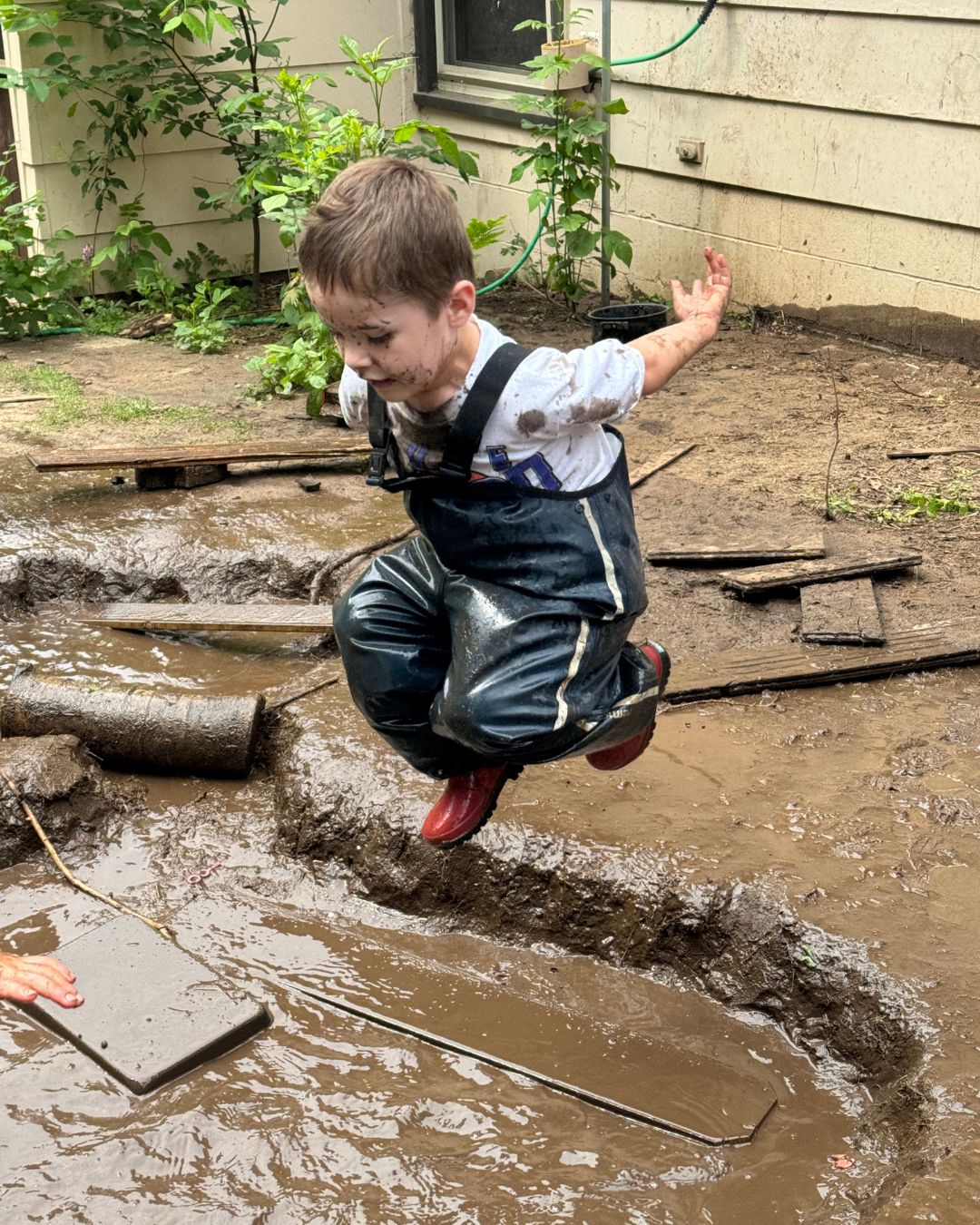
As an individual who has almost 5 years of childcare experience, I have seen many different philosophies around risky play. Some, like Wildlings Nature Preschool, have allowed children to fully embrace trusting their minds and bodies, allowing children to engage in supported risky play. Others have limited children from playing with sticks and rocks, had rules against climbing trees, and generally communicated to kids that they can not be trusted to learn and know what feels safe for their bodies.
Can you guess which kids were happier, more active, and more understanding of both their bodies strengths and limits?
To better understand the concept of risky play, let’s go over some of the basics:
What it is
According to Boston University, “risky play can be defined as any play that is thrilling or exciting and involves some risk of injury.” The key factors are:
- Height and elevation
- Speed and momentum
- Use of risky or adult tools
- Interaction with natural elements
- Play with the chance of “getting lost”
- Rough-and-tumble play (like play fighting)
Why it matters
Risky play allows children to test their bodies and learn their limits, build valuable skills, improve strength, speed, balance, and flexibility, and build confidence by practicing and unlocking new abilities. At Wildlings Nature Preschool, we abide by the idea that children intuitively know what their bodies need.
It’s important to step in and manage play when the risks truly outweigh the benefits. But it’s just as important for caregivers to recognize when we might be holding children back, not because it’s unsafe, but because it feels more comfortable for us.
How can we manage risky play responsibly?
We can…
- Offer opportunities for children to explore risk and challenge themselves.
- Embrace natural landscapes rather than exclusively playing on playgrounds
- Model assessment of risk
- Ask questions
- Step in when necessary
- Respect children’s limits
What caregivers can expect from risky play
Caregivers can expect to be a bit uncomfortable when they embrace risky play. It’s hard to let go of control and the comfort of risk avoidance. It is important to remember that allowing reasonable risk to exist in children’s lives will aid them in the long run, but of course, to trust your gut when you can sense that there is a threat of more serious injury or harm to the child in your care.
Overall, when caregivers embrace risky play, they can expect their children to develop risk management and problem-solving skills, gain new physical abilities and strengthen existing ones, and become more confident in themselves.
